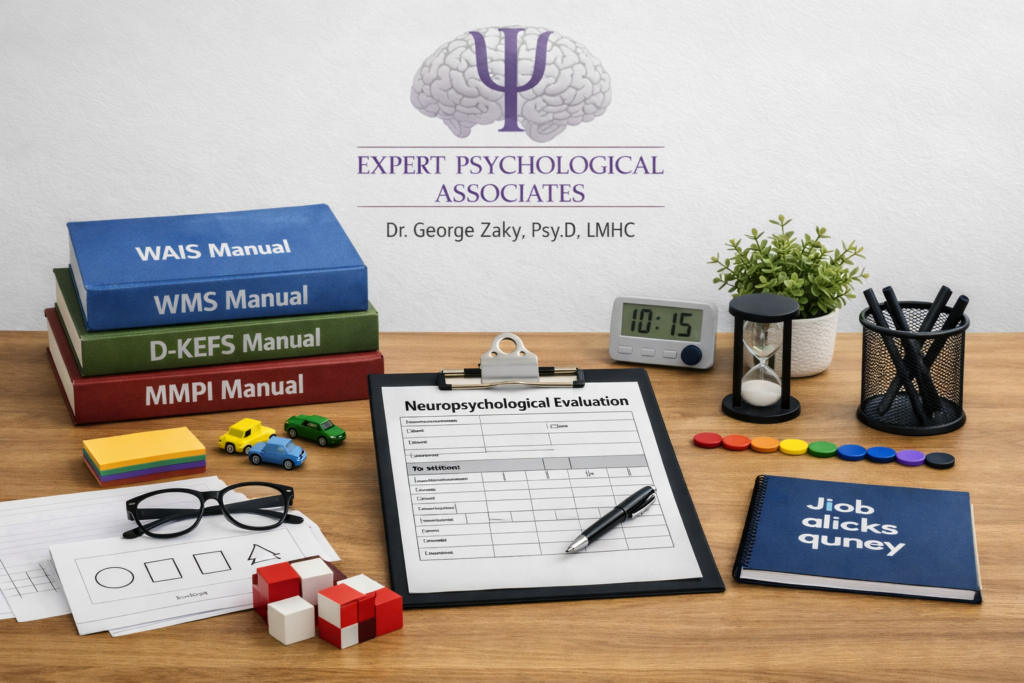
Neuropsychological evaluations help identify how the brain is functioning in areas such as memory, attention, problem‑solving, language, and processing speed. These evaluations are especially helpful when someone is experiencing cognitive changes, learning difficulties, or challenges that may be related to neurological, developmental, medical, or age‑related conditions.
Our approach is supportive, thorough, and grounded in evidence‑based assessment. We take time to understand each person’s unique strengths, challenges, and concerns so we can provide clear answers and practical recommendations.
What Is a Neuropsychological Evaluation?
A neuropsychological evaluation is a comprehensive assessment of cognitive, emotional, and behavioral functioning. It helps identify how different areas of the brain are working and how these abilities may affect daily life, school, work, or relationships.
These evaluations are often recommended when someone is experiencing:
- Memory problems
- Difficulty concentrating or staying organized
- Changes in mood or behavior
- Learning difficulties
- Slowed thinking or processing
- Cognitive changes after a concussion or head injury
- Concerns related to neurological or medical conditions
- Age‑related cognitive decline or confusion
Conditions We Evaluate
Neuropsychological evaluations can help clarify concerns related to:
- ADHD and executive functioning difficulties
- Autism spectrum conditions
- Learning disorders (dyslexia, dysgraphia, dyscalculia)
- Concussion and traumatic brain injury
- Stroke or neurological conditions
- Memory concerns or cognitive changes
- Dementia, Alzheimer’s disease, and mild cognitive impairment (MCI)
- Age‑related cognitive decline
- Developmental delays
- Emotional or behavioral changes that may have a cognitive component
What a Neuropsychological Evaluation Measures
A comprehensive evaluation may include assessment of:
- Attention and concentration
- Memory and learning
- Processing speed
- Executive functioning (planning, organization, impulse control)
- Language skills
- Visual‑spatial abilities
- Academic skills (reading, writing, math)
- Emotional and behavioral functioning
These areas help create a complete picture of how someone is functioning and where support may be needed.
Why Someone Might Need a Neuropsychological Evaluation
A neuropsychological evaluation may be helpful if you or a loved one is experiencing:
- Difficulty focusing, staying organized, or completing tasks
- Struggles with memory or learning new information
- Academic challenges that don’t improve with tutoring
- Cognitive changes after a concussion or injury
- Slowed thinking or difficulty processing information
- Concerns about developmental delays
- Emotional or behavioral changes that may be related to cognitive functioning
- Questions about how a medical or neurological condition is affecting daily life
- Memory loss, confusion, or cognitive decline related to aging
- Concerns about dementia, Alzheimer’s disease, or mild cognitive impairment (MCI)
- Changes in judgment, personality, or daily functioning in an older adult
- Difficulty managing medications, finances, or daily tasks due to possible cognitive changes
- The need for differential diagnosis to clarify whether symptoms are due to aging, depression, anxiety, neurological conditions, or dementia
What to Expect During the Evaluation
We understand that neuropsychological testing can feel overwhelming. Our goal is to make the process comfortable, clear, and supportive.
Here’s what the process typically includes:
- Initial Consultation
We discuss your concerns, history, and goals for the evaluation. - Clinical Interview
A detailed conversation about developmental, medical, educational, and emotional history. - Standardized Testing
Evidence‑based cognitive and psychological tests tailored to your needs. - Record Review
When appropriate, we review medical records, school records, or prior evaluations. - Scoring & Interpretation
All results are analyzed using research‑supported methods. - Comprehensive Report
A clear, detailed report summarizing strengths, challenges, diagnoses (if applicable), and recommendations. - Feedback Session
We review the results together and discuss next steps, supports, and treatment options.
Our Approach
We take pride in providing evaluations that are:
- Compassionate and supportive
- Thorough and evidence‑based
- Clear and easy to understand
- Focused on practical, real‑world recommendations
- Tailored to each person’s unique needs
Our goal is to help you understand what’s going on and what can help moving forward.
Serving Port St. Lucie, Stuart, Jensen Beach, Palm City, Fort Pierce, Vero Beach, and Palm Beach County.
Ready to Get Started
Contact the office with any questions or to schedule an appointment.
📞 Call the Office ✉️ Email the Office